WHAT IS CSU?

IF YOU'VE BEEN DEALING WITH RECURRING HIVES OR SWELLING, IT'S NORMAL TO FEEL CONFUSED OR FRUSTRATED.

OVERVIEW

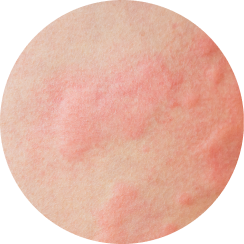
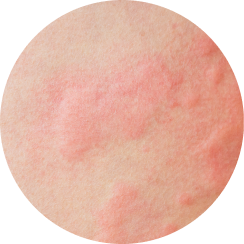
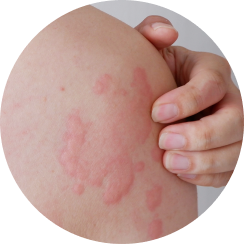
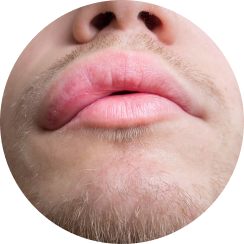
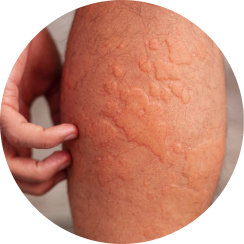
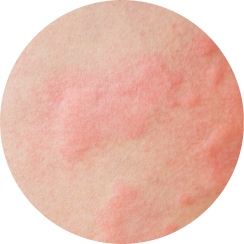
Chronic Spontaneous Urticaria (CSU) is a chronic skin condition marked by recurring hives and/or swelling lasting 6 weeks or more, often without a clear trigger.1,2,3,4

Symptoms are unpredictable and not always visible, which can delay recognition and underestimate their impact on daily life.5,6

KEY FACTS

  • CSU is often mistaken for eczema, or allergies, which can delay accurate diagnosis and treatment.4

  • Unlike allergies, it involves a specific dysregulation of the immune system.5 Leading to mast cells releasing histamine from the inside out, and swelling.

  • Sleep is mostly affected — 68% of people with CSU struggle with it.6

  • Symptoms affect work — CSU patients report difficulty in professional settings, including meetings and social activities.7

  • 4× patients report more severe symptoms than their doctor realises.8

SYMPTOMS

CSU symptoms are similar to short-lived hives, but they recur frequently and persist over time. Symptoms typically appear at least twice a week and can continue for six weeks or longer.

ACT

CSU can be difficult to recognise because symptoms come and go, are not always visible, and may be expected to resolve on their own. This can delay diagnosis for some patients.9

CSU is often identified after a patient with similar symptoms, such as allergies or eczema, have been ruled out, a process known as diagnosis of exclusion.10

WHAT HELPS AT MEDICAL APPOINTMENTS

If symptoms aren't visible on the day of your visit, these can help your doctor understand what's happening:

  • Photos of flare-ups
  • A simple timeline of when symptoms started and how often they return
  • Notes on how symptoms affect sleep, daily activities, work, or social life

WHAT TO EXPECT AFTER DIAGNOSIS

WHERE MOST PEOPLE BEGIN

Antihistamines are generally the first-line treatment for CSU. While they are effective for some people, many continue to experience symptoms.14

WHY SOME PEOPLE STILL FEEL “UNWELL”

Over half (61.4%) of people remain symptomatic on antihistamines.16,22 Some also report side effects such as drowsiness.14

WHAT GOOD CONTROL LOOKS LIKE

Your treatment goal doesn't have to be “slightly better”. Minimal symptoms and little disruption to daily life are valid goals.

If you're still feeling itchy, losing sleep, or planning life around flare-ups, it is reasonable to ASK AGAIN.

SOURCES

  1. Magdalena-Balp M et al. J Eur Acad Dermatol Venereol (JEADV). 2018
  2. Maurer M et al. Allergy. 2017
  3. Fricke J et al. Allergy. 2020
  4. Weller K et al. Dermatol Ther. 2025
  5. Wagner N et al. Dermatol Ther. 2021
  6. REMIX studies (patient-reported insights; internal Novartis research)
  7. Remibrutinib Patient and Value Proposition Research. Novartis, 2024
  8. Powell RJ et al. Clin Exp Allergy. 2015
  9. Magdalena-Balp M. Dermatol Ther. 2021
  10. Lumanity. CSU Patient Activation Campaign: Phase 2, Final Report. July 2025
  11. Zuberbier T et al. Allergy. 2022 (EAACI/GA2LEN/EuroGuiDerm/APAAACI guidelines)
  12. Kaplan AP. Allergy Asthma Immunol Res. 2012
  13. Maurer M et al. N Engl J Med. 2013
  14. Novartis data on file. 2023
  15. Magerl M et al. Allergy. 2016
  16. Saini S et al. J Allergy Clin Immunol Pract. 2015
  17. Guillen-Aguinaga S et al. Br J Dermatol. 2016
  18. Staubach P et al. Acta Derm Venereol. 2006
  19. Ständer S et al. Acta Derm Venereol. 2012
  20. Thomsen SF et al. Am J Clin Dermatol. 2019
  21. Vestergaard C et al. Eur Ann Allergy Clin Immunol. 2019
  22. Magerl M et al. J Allergy Clin Immunol Pract. 2021